Designing with Care in Mind
There are spaces where design has to earn its place in a different way. Not by being impressive, but by being appropriate. Appropriate to the people in the room, the constraints those people live with, and the experience the space is being asked to create. This spring, we had the chance to be part of one of those spaces.
Seattle Children's First Prom
 Seattle Children's Hospital hosted its very first prom this spring, and we were honored to be among the community of donors who helped make it happen. The theme was Evergreen. The guest count, around 50 to 60 teenage patients and their loved ones, blew the organizing team's expectations entirely.
Chloe Reinheart, Child Life Specialist in the Blood Disorders and Cancer Center at Seattle Children's, described the night in a note that has stayed with us: "It was a really beautiful time to experience the support of the community around us to make this dream a reality." She wrote about a patient who picked out their own suit, came back the next day for hair and makeup, and when asked how they felt as they were leaving, said: "I feel SO beautiful."
That is what the night was for.
What the Space Needed to Be
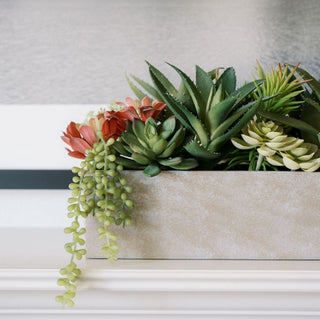
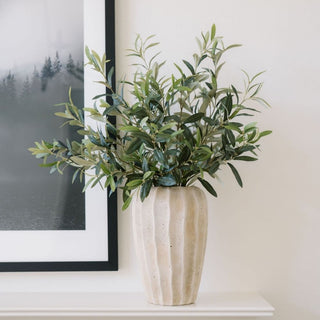
Designing for an event like this one comes with a specific and non-negotiable constraint. With patients attending who have compromised immune systems, respiratory conditions, and allergy sensitivities, live botanicals were not a consideration. Not because of aesthetics, but because of care. Greenery in that room had to bring warmth and presence without introducing pollen, soil, moisture, or anything airborne into a space where those variables carry real consequences.
Faux botanicals were not a workaround. They were the correct material for the room and the people in it.
How the Greenery Worked

The 9' Faux Cedar Garland Evergreen was wrapped around the venue's structural columns, spiraling dense cedar foliage upward and anchoring the Evergreen theme from the ground up. Cream floral blooms punctuated the garland at intervals, visible and intentional even against the colored lighting of the dance floor. In the wider shots of the room, trailing faux botanicals and foliage along the upper walls completed a space that felt designed, not dressed. Chloe noted that many guests remarked the decorations felt professional. That read as a compliment to everyone involved.
What made the greenery work was not the product alone. It was the placement. Greenery wrapped around a column stops being a decorative gesture and becomes part of the room's architecture. It gives the eye somewhere to travel, creates vertical scale, and signals that the space was built with intention. In a room where teenagers who navigate extraordinary daily challenges were being celebrated, that intention was the whole point.
On Designing for the People in the Room
This partnership reminded us of something worth naming. The most considered spaces are not always the most photographed ones. They are the spaces where every decision was made in service of the people who would be inside them. Where the materials chosen were chosen because they were right, not because they were easier or more impressive. Where the design itself is an act of care.
Faux greenery gets that opportunity in a way that live plants sometimes cannot. In health-sensitive environments, it removes a variable that would otherwise limit what the space can do for the people in it. In this case, it helped turn a hospital venue into a ballroom. And in that ballroom, teenagers danced, sang along to music on a light-up floor, and felt, for a night, exactly as celebrated as they deserved to be.
We are grateful to Chloe Reinheart and the entire team at Seattle Children's Hospital for trusting us to be part of it. And to the patients who showed up, dressed up, and danced: thank you for letting us be there, even in a small way.
Designer Answers

Q: Are faux plants appropriate for hospital environments and health-sensitive spaces?
A: Yes. Faux botanicals introduce no pollen, soil, moisture, or airborne particles into a space, making them suitable for environments where guests or residents have immune vulnerabilities, respiratory conditions, or allergy sensitivities. They deliver the visual warmth of live greenery without any of the biological variables.
Q: Can faux garland work as a structural design element, not just a decorative one?
A: When used on architectural features like columns, stairways, or beams, faux garland functions as part of a room's visual infrastructure. It creates vertical scale and continuity in a way that tabletop or surface-level greenery cannot.
Q: What types of events benefit most from faux rather than live botanicals?
A: Any event where guests include people with allergies, immune sensitivities, or respiratory conditions. Medical facility events, allergy-conscious weddings, senior living celebrations, and school events are all contexts where faux greenery removes a constraint without compromising the design.
Q: How was the faux cedar garland used at the Seattle Children's prom?
A: The 9' Faux Cedar Garland Evergreen was wrapped around the venue's draped columns, creating vertical presence and anchoring the Evergreen theme throughout the space.
A Night Worth Remembering
Follow along on Instagram, Pinterest, and TikTok at @cghunterhome, and explore more on the Designer Journal. For weekly perspective on design and the ideas behind the spaces we build, subscribe on Substack.