Quiet Luxury vs Loud Luxury in Interior Design
For the past few years, interior design has operated within a rigid binary: either you embraced stark minimalism, or you leaned into maximalist excess. But neither extreme reflects how most people actually want to live. Minimalism can feel cold and uninhabitable. Maximalism can feel chaotic and exhausting. What's emerging in 2026 is a more nuanced approach that acknowledges both restraint and expression without committing entirely to either.
This is where the conversation around quiet luxury and loud luxury becomes useful. In 2026, the conversation around quiet luxury vs loud luxury in interior design reflects a broader shift away from rigid minimalism toward more intentional, flexible homes. These aren't just marketing terms or passing trends. They're design philosophies that help explain how spaces can feel intentional, layered, and adaptable without falling into the trap of visual silence or visual noise. And critically, they can coexist in the same home when approached with clarity and restraint.
The goal isn't to choose one over the other. It's to understand what each offers and how to use both strategically. A home designed with intention doesn't reject personality in favor of neutrality, nor does it sacrifice calm for visual impact. It finds balance through material quality, thoughtful scale, and pieces that transition as taste evolves.
What Quiet Luxury Means in Interior Design

Quiet luxury in interior design is about material quality and restraint. It's not minimalism, though the two are often confused. Minimalism strips away ornamentation in favor of function and visual clarity. Quiet luxury retains warmth, texture, and comfort while rejecting anything that feels performative or temporary.
The defining characteristic of quiet luxury is that nothing demands attention. The sofa is well made but not statement making. The rug is natural fiber, not a bold pattern. The color palette leans neutral, but not because neutrals are trendy. Because they allow the architecture, light, and proportions of a room to do the work.
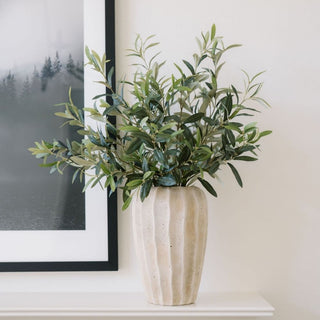
This approach prioritizes longevity. Pieces are chosen not for how they photograph, but for how they function over time. A linen tablecloth that softens with use. A set of natural wood taper candle holders that feel as appropriate in February as they do in October. A faux olive tree that provides structure and warmth without requiring explanation or seasonal rotation.
Quiet luxury doesn't announce itself. It simply exists, supporting the life happening around it. And it works best when the foundation is strong enough that individual elements can shift without disrupting the overall sense of calm.
What Loud Luxury Looks Like at Home
Loud luxury is not excess. It's not clutter, and it's not maximalism for its own sake. Loud luxury is intentional drama. It's the decision to use scale, contrast, or sculptural form to create a focal point that commands attention.
A single oversized piece of art. An 8-foot bird of paradise tree anchoring a corner. A bold rug with graphic pattern. These are loud luxury elements, and they work because they're surrounded by calm. The rest of the room doesn't compete. It defers.
The mistake people make with loud luxury is assuming it requires volume. It doesn't. Loud luxury is about confidence, not quantity. One statement piece in a neutral room reads as intentional. Three statement pieces in the same room read as indecision.
What separates loud luxury from visual chaos is editing. The bold gesture is deliberate. The surrounding elements support it without echoing it. And critically, the piece itself is high quality. Loud luxury doesn't mean cheap drama. It means investing in something with enough presence to stand alone.
This is why a natural and black diamond jute rug can function as a loud luxury element in one context and a quiet luxury foundation in another. The piece itself doesn't change. The context does.
Why Design Is Moving Beyond Minimalism

Minimalism promised clarity and calm, but in practice, it often delivered sterility. Rooms that looked beautiful in photographs but felt uncomfortable to occupy. Spaces that required constant maintenance to remain visually "clean." A design philosophy that left little room for the textures, objects, and imperfections that make a home feel lived in.
The shift away from minimalism isn't a rejection of restraint. It's a recognition that restraint and warmth aren't mutually exclusive. People want homes that feel edited but not empty. Calm but not cold. Thoughtful but not precious.
This is where both quiet luxury and loud luxury offer solutions. Quiet luxury brings warmth through material quality and texture without visual noise. A linen throw, a ceramic vessel, a set of grey wood taper candle holders. These elements add softness and humanity without clutter.
Loud luxury addresses the desire for personality and expression. A 30-inch snake plant provides architectural structure. Faux green magnolia leaf stems introduce organic form and scale. These pieces give a room character and presence without requiring the visual uniformity minimalism demands.
What's replacing minimalism isn't a single trend. It's a more flexible approach to design that allows for both restraint and expression, depending on what a space needs. The unifying principle is intention. Every piece should justify its presence, whether it's quiet or loud.
Transitional Decor That Works for Quiet and Loud Luxury Homes
The most versatile pieces in a home are those that shift depending on context. They can read as quiet luxury in one setting and loud luxury in another, not because the piece itself changes, but because the surrounding elements reframe it.
A faux eucalyptus and citrus topiary set is a good example. Placed alone on a console with minimal styling, it reads as quiet luxury. Sculptural but restrained, organic but controlled. Grouped with other greenery in a larger arrangement, it contributes to a louder, more layered moment. The piece adapts.
Candle holders function the same way. A set of white wood taper candle holders on a neutral tablecloth creates a quiet, refined tablescape. The same holders paired with bold linens, graphic ceramics, or clustered in multiples become part of a more expressive composition. The foundation remains, but the context shifts.
This is the advantage of transitional decor. It doesn't lock you into a single aesthetic. A neutral jute rug works under a minimalist dining table or beneath a bold, sculptural coffee table. Faux greenery supports both calm, organic styling and dramatic, high-contrast interiors. The investment isn't wasted when your preferences evolve.
CG Hunter's approach has always centered on this kind of flexibility. Pieces that work across seasons, aesthetics, and moods. A faux olive tree doesn't belong exclusively to quiet luxury or Mediterranean styling. It's an anchor that supports whatever surrounds it. The same is true of natural fiber rugs, simple vessels, and sculptural greenery. They're tools, not statements.
How to Mix Quiet and Loud Luxury in One Home

The best homes don't commit entirely to one aesthetic. They use quiet luxury as a foundation and loud luxury as punctuation. The majority of the space remains calm, neutral, and restrained. But one or two elements introduce scale, contrast, or visual weight that give the room personality without overwhelming it.
This is the principle behind layering. A neutral sofa, a jute rug, linen curtains. These are quiet luxury elements that create breathing room. Then a single bold piece of art, an oversized floor plant, or a sculptural light fixture provides a focal point. The quiet elements allow the loud element to register. Without that contrast, nothing stands out.
Greenery is particularly effective at bridging both aesthetics. A single large plant like an 8-foot bird of paradise or olive tree can function as a loud luxury element in a minimal room. But grouped with other plants or placed in a room with layered textures, it becomes part of a quieter, more organic composition. The same piece adapts based on how it's styled.
The key is editing. If every surface has a statement piece, nothing feels intentional. If every room is neutral and restrained, the home can feel flat. The balance comes from knowing when to add and when to pull back. A quiet living room can support a bold dining room. A calm bedroom benefits from restraint. The home doesn't need to be uniform.
This approach also allows for seasonal flexibility. In early February, a simple tablescape with blush linens and a set of natural wood candle holders might feel appropriately restrained for Valentine's Day styling. By March, those same pieces transition seamlessly into spring styling. Nothing feels temporary because the foundation was never seasonal to begin with.
Designer Answers: Quiet Luxury vs Loud Luxury at Home
What is the difference between quiet luxury and loud luxury? Quiet luxury prioritizes material quality, neutral palettes, and restraint. It's about pieces that don't demand attention but support the life happening around them. Loud luxury uses scale, contrast, or sculptural form to create intentional focal points. Both can coexist when balanced properly, with quiet luxury providing the foundation and loud luxury providing punctuation.
Can a home have both quiet and loud luxury? Yes, and the best homes often do. Quiet luxury creates breathing room and allows loud luxury elements to register without feeling chaotic. A neutral sofa, jute rug, and linen curtains can support a bold piece of art or an oversized plant. The quiet elements give the loud elements something to push against, creating visual tension that feels dynamic rather than overwhelming.
Is quiet luxury just minimalism? No. Minimalism strips away ornamentation in favor of visual clarity and often results in spaces that feel cold or uninhabitable. Quiet luxury retains warmth, texture, and comfort while rejecting anything performative or temporary. It's about longevity and material quality, not visual emptiness. A linen throw, a ceramic vessel, or faux greenery can be quiet luxury without being minimalist.
How do you make loud luxury feel intentional? Editing is critical. One statement piece in a calm room reads as confident. Three statement pieces in the same space read as indecision. Loud luxury works when it's surrounded by restraint and when the piece itself is high quality. A bold rug, an oversized plant, or a sculptural light fixture should stand alone, not compete with other loud elements in the same sightline.
What decor works best as transitional pieces? Pieces that shift depending on context. Faux greenery, natural fiber rugs, simple candle holders, and neutral linens can read as quiet luxury in one setting and support loud luxury in another. These pieces adapt as your taste evolves and don't lock you into a single aesthetic. They're investments that remain relevant regardless of how the rest of the room changes.
What interior design trends are replacing minimalism? The shift is toward homes that feel edited but not empty, calm but not cold. People want texture, warmth, and personality without visual chaos. Both quiet luxury and loud luxury respond to this by offering restraint and expression in balance. The unifying principle is intention. Every piece should justify its presence, whether it's quiet, loud, or somewhere in between.
Designing with Flexibility, Not Rigidity

The most useful framework for thinking about home design in 2026 isn't choosing between aesthetics. It's understanding how different elements function together and allowing for flexibility as preferences evolve. Quiet luxury and loud luxury aren't opposing forces. They're complementary tools that address different needs within the same space.
A home designed with intention doesn't require a complete overhaul when your taste shifts. It adapts. The foundation remains calm and versatile. The accents change. The pieces you invest in are chosen for their ability to support multiple contexts, not just one moment in time.
This is why transitional decor matters. A faux olive tree works in a Mediterranean-inspired living room, a quiet luxury entryway, or a bold, contrast-heavy dining space. A jute rug supports minimalist styling, organic modernism, or layered, textural interiors. The piece doesn't change. The context does.
The goal isn't perfection. It's a home that feels considered, adaptable, and aligned with how you actually live. Not how a room should look in a photograph, but how it functions day to day. That's the difference between designing for a trend and designing with intention.
Explore more transitional pieces and design insights throughout the CG Hunter Designer Journal and collection. Follow @CGHunterHome on Instagram, Pinterest, TikTok, and Substack for daily inspiration on creating homes that honor restraint, flexibility, and timeless design. For wholesale inquiries, shop CG Hunter on FAIRE.