STYLE WITH CG HUNTER
FAUX TREE SIZE GUIDE
How to Choose the Right Faux Tree Size
Choosing the right size faux tree is essential to creating a space that feels balanced and intentionally designed. When decorating with faux trees, scale plays just as important a role as placement. A tree that’s too small can feel lost, while one that’s too large can overwhelm the room. The goal is to select a size that complements your furniture, ceiling height, and overall layout.
It’s also important to understand how faux trees are measured. Height is determined by the tallest point of the tree after shaping. Because faux trees are designed with natural movement, the fullest branches may not sit at the very top—so the overall height reflects the highest tip rather than the densest part of the tree.
Lifelike Faux Trees
Under 3'
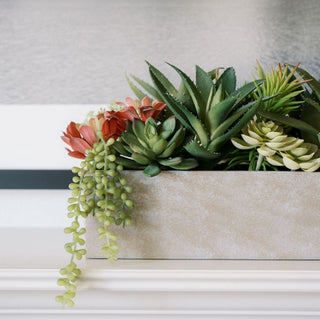
Faux trees under 3 feet are best used as accents rather than focal points. Their smaller scale makes them ideal for styling on consoles, kitchen counters, shelves, or bathroom vanities—anywhere you want to add a subtle touch of greenery without taking up floor space.
They’re perfect for creating layered moments throughout the home. For example, place one beside a sink, on a nightstand, or at the end of a bookshelf to soften the space. Pair with ceramic or stone planters and natural materials like wood or linen to keep the look refined and cohesive.
3–5'
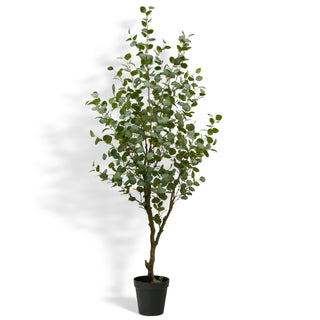
Faux trees in the 3–5 foot range are the most versatile. This size offers enough height to stand on its own while still being easy to incorporate into a variety of spaces.
Use them to fill corners, style beside chairs, or place in entryways for a welcoming touch. They’re especially well-suited for smaller living rooms, bedrooms, or apartments where a larger tree might feel too dominant. A 4–5 foot tree adds vertical interest without overwhelming the room.
This size also layers well with surrounding décor—position it near a console, under a mirror, or alongside artwork to create a balanced composition.
Over 6'
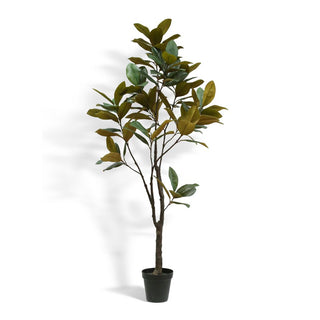
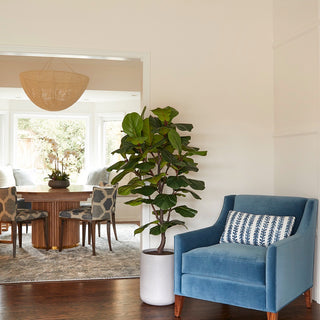
Faux trees over 6 feet are designed to make a statement. Their height naturally draws the eye, making them ideal for living rooms, open-concept spaces, or areas with higher ceilings.
Place them in empty corners to soften architectural lines, or beside substantial furniture to create balance. When styling larger trees, choose planters with enough scale—such as oversized ceramic pots or textured baskets—to ground the look.
Because of their presence, it’s best to keep surrounding décor minimal and let the tree act as a focal point.
Final Styling Notes
When decorating with faux trees, it’s often better to go slightly taller than you think. Taller trees tend to feel more natural and proportional, especially when paired with the right planter.
Consider how the tree looks from different angles, and aim for placement that feels integrated into the room. The right size will help create a space that feels cohesive, elevated, and effortlessly complete.
The Designer Journal
For more on sizing, styling, and product guidance visit our Designer Journal. Explore thoughtful design insights, botanical inspiration, and expert notes from the world of CG Hunter.
Become An Insider
Sign up for styling inspiration, updates on new arrivals, and news on special offers.