STYLE WITH CG HUNTER
FAUX OLIVE TREE STYLING GUIDE
Olive Trees Throughout the Home
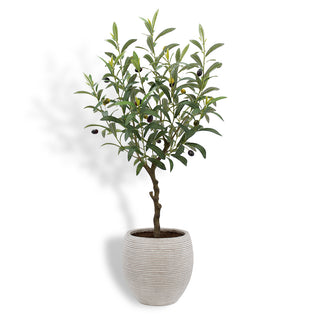
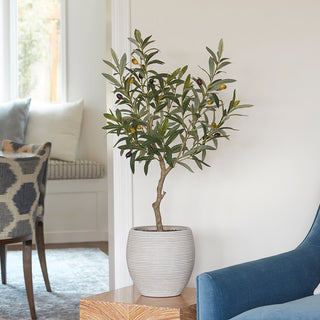
Faux olive trees bring structure, softness, and organic elegance to spaces throughout the home. In living rooms, place one in an empty corner to soften architectural lines, beside a sofa or console for height and balance, or near windows and glass doors where natural light would naturally fall. Stairwells and landings are also ideal placements, adding vertical interest and movement to transitional areas.
For porches, patios, and entryways, style faux olive trees in covered or protected areas to help preserve their appearance. Use matching trees to frame a front door for symmetry and structure, or place a single tree beside a bench, layered doormat, or textured planter for a more relaxed look. In bathrooms, a smaller olive tree can soften tile, stone, and metal finishes while creating a serene, spa-like feel. To finish the look, choose a planter that complements the space, such as ceramic for a clean, modern style or woven textures for warmth.

Lifelike Faux Olive Trees
Neutral Approach
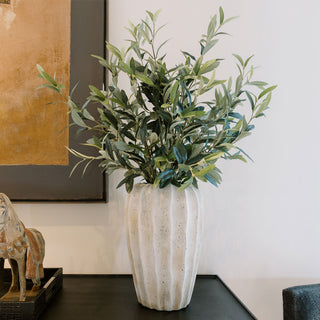
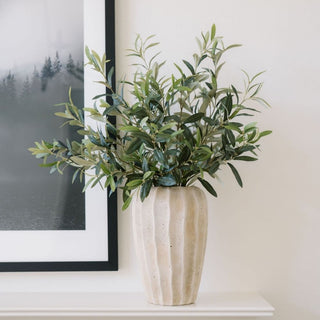
In neutral and modern spaces, olive green acts as a soft accent rather than a focal point. Pair it with warm whites, taupe, sand, muted wood tones, and clean-lined furnishings to create a calm, timeless environment. The greenery sets an elevated tone, bringing elegance, freshness, and quiet sophistication to both residential and hospitality interiors. Its subtle color adds depth without disrupting a refined palette, making the faux olive tree feel clean, intentional, and effortlessly organic.
Maximalist Approach
For a more expressive look, olive green pairs beautifully with richer, contrasting hues like deep navy, terracotta, blush, or mustard. These combinations add depth and highlight the greenery.
When working with color, anchor the palette with one or two dominant tones and let the olive tree act as a natural bridge between them.
Earth Tone Approach
For a grounded, organic look, olive green pairs naturally with earth tones like clay, sand, stone, warm beige, bark brown, and soft taupe. These shades complement faux plants beautifully, especially pieces with realistic dirt, textured trunks, and natural-looking branches.
This palette helps the greenery feel more connected to the space rather than standing out on its own. Use materials like wood, ceramic, linen, rattan, and woven textures to echo the natural details of the plant.
Final Styling Notes
When decorating faux olive trees, think beyond a single placement and create a cohesive look by layering in complementary olive pieces.
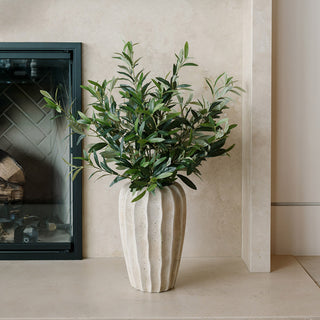
The CG Hunter 9' Olive Garland is especially versatile—style it as a table runner, drape it along a banister, or layer it across a mantel for added depth. Pairing it with a nearby faux olive tree helps visually connect the space.
For vertical accents, incorporate a CG Hunter 24" Olive Wreath or CG Hunter 30" Olive Wreath on doors, above mantels, or over mirrors to echo the greenery without overwhelming the room.
The goal is to repeat the olive motif in a balanced way, creating a space that feels cohesive and effortlessly styled.
The Designer Journal
For more on sizing, styling, and product guidance visit our Designer Journal. Explore thoughtful design insights, botanical inspiration, and expert notes from the world of CG Hunter.
Become An Insider
Sign up for styling inspiration, updates on new arrivals, and news on special offers.