The 3 Anchors That Keep Layered Rooms from Reading as Clutter
Cluttercore is a cultural reaction. For years, design media celebrated interiors stripped to their visual minimums. White walls. Empty surfaces. Negative space as the primary design element. The aesthetic was calming in photographs but often felt sterile in practice. Homes began to look like showrooms rather than places where people actually lived. Cluttercore emerged as a correction, not a rejection of design principles, but a rejection of the idea that beauty requires emptiness.
The cluttercore aesthetic embraces abundance. Collections. Layered textiles. Shelves filled with objects that hold meaning. But this isn't permission for mess. The difference between cluttercore and chaos is intention. Every piece serves a purpose, whether functional, emotional, or visual. The room feels full without feeling overwhelming because the density is organized around structure, editing, and rhythm.
What cluttercore meaning actually signals is the desire for homes that reflect how people live. Spaces that accommodate hobbies, collections, memories, and the accumulation of a life rather than demanding constant curation to maintain a minimalist ideal. The trend asks whether a room can feel abundant and intentional simultaneously. The answer is yes, but only when the layering is built on architectural clarity rather than impulse.
What Cluttercore Means in Practice

Cluttercore decor is characterized by visible collections, layered textiles, filled shelves, and surfaces that hold multiple objects rather than one carefully chosen piece. Books stacked horizontally and vertically. Vintage finds mixed with contemporary pieces. Greenery positioned at multiple heights. Textiles layered rather than singular. The composition feels lived in, personal, and unapologetically full.
Design publications describe cluttercore as the antithesis of minimalism, but that framing misses the point. Cluttercore isn't anti-minimalism. It's pro-personality. It prioritizes emotional resonance over visual simplicity. The room tells a story through its objects rather than through negative space.
The risk is that without structure, cluttercore tips into visual noise. Too many competing elements. No breathing room. Surfaces so dense that nothing registers individually. This is where the distinction between intentional abundance and accidental clutter becomes critical. Cluttercore requires more editing than minimalism, not less. Every object must justify its presence, and the overall composition must create coherence despite the density.
Cluttercore vs Maximalism: Story Over Aesthetic
Maximalism and cluttercore are often conflated, but they operate differently. Maximalism is aesthetic-driven. It embraces bold color, pattern, and visual drama. The goal is sensory richness. Cluttercore is story-driven. It's about the objects themselves and what they represent. A maximalist room might feature coordinated patterns and saturated color. A cluttercore room might be neutral in palette but dense in personal objects.
The difference, as design editors note, is that maximalism can be curated for effect, while cluttercore feels accumulated over time. Maximalism asks what looks good together. Cluttercore asks what means something together. Both approaches can coexist, but the motivations differ. One is aesthetic-led. The other is life-led.
This distinction matters because it determines how you approach layering. In a maximalist space, you might add a patterned rug because it balances the room visually. In a cluttercore space, you add the rug because it came from a trip that mattered or because it anchors a collection of objects tied to a specific interest. The visual result might be similar, but the underlying logic is different.
The 3 Anchors of Cluttercore That Doesn't Read as Clutter

The challenge with cluttercore is maintaining coherence when every surface holds multiple objects. Without structure, the room feels chaotic. The three anchors below create the framework that allows density without disorder.
Anchor 1: Structural Greenery as Architectural Pause
Greenery functions as the organizing element in cluttercore rooms. Not small potted plants scattered across surfaces, but substantial pieces that establish vertical line, mass, and sculptural silhouette. An 8-foot olive tree anchors a corner and provides visual pause. The eye moves to the tree, rests, then continues scanning the room. Without that pause, the density becomes overwhelming.
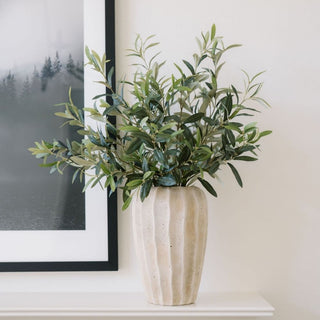
The greenery doesn't add to the clutter. It organizes it. A 30-inch faux olive arrangement in an artisan vase on a console provides mass and height without competing with the objects surrounding it. The organic form contrasts with the harder edges of books, frames, and collected objects, creating visual relief.
This is why faux greenery works particularly well in cluttercore spaces. It provides the architectural function without adding maintenance variables. The tree doesn't require repositioning for light. The arrangement doesn't wilt or shed. The greenery remains consistent, allowing the rest of the room to shift and evolve without destabilizing the structure.
Anchor 2: Edited Collection (Curation, Not Accumulation)
The edit is the style. This is the principle that separates cluttercore from hoarding. Every object on a shelf, every book on a stack, every piece of pottery on a surface should be there because it adds something. The moment you're keeping things out of obligation or indecision, the room tips into clutter.
Editing in a cluttercore space means being selective about what stays visible. Not everything you own needs to be displayed simultaneously. Rotate collections. Store seasonal items. Keep only the pieces that actively contribute to the room's narrative. A 12-inch rosemary and 16-inch olive topiary set on a shelf introduces small-scale greenery that supports rather than competes with surrounding objects. The scale is intentional. The placement is deliberate.
The goal is not to fill every surface. The goal is to layer meaningfully. A shelf with three well-chosen objects and a small topiary reads as curated. A shelf with fifteen objects crammed together reads as storage. The difference is breathing room. Even in cluttercore, negative space matters. It just appears between objects rather than across entire walls.
Anchor 3: Rhythm Rule (Repetition of Form, Material, and Tone)
Repetition creates coherence. In a cluttercore room, this might mean using the same vessel finish across multiple surfaces. An etched borosilicate glass bud vase on a console, another on a shelf, a third on a side table. The repetition unifies disparate objects by creating visual rhythm. The eye recognizes the pattern and reads the room as intentional rather than random.
The same principle applies to material and tone. A hammered glass vase in smoke introduces a finish that can be repeated through other glass or metal objects in the room. The repetition doesn't need to be literal. It's about creating a tonal relationship that ties the composition together. Warm metals. Natural wood. Textured glass. These materials appear multiple times, creating continuity.
Rhythm also applies to silhouette. Statement stems from the stems and branches collection provide vertical movement without adding visual weight. The newly released 27-inch artificial white ranunculus stems offer height and organic form that bridges the greenery and the collected objects. The silhouette repeats across the room at different scales, creating a visual thread that holds the density together.
How to Make a Cluttercore Room Without It Looking Messy
The line between cluttercore and mess is editing. Top designers executing cluttercore emphasize that the room should feel full, not chaotic. This requires constant curation. Objects that no longer serve the room get removed. Collections get rotated. Surfaces get cleared and restaged periodically.
Start with a structural anchor. Position greenery or a substantial piece of furniture that establishes scale. Build the density around this anchor rather than scattering objects across every surface. The anchor organizes the chaos and provides a visual reference point.
Use repetition to create rhythm. Choose a vessel finish, a material, or a color tone and repeat it across the room. This creates visual coherence that allows the eye to move through the space without getting stuck on individual objects. The repetition signals intention.
Edit ruthlessly. Not everything you own deserves display. Keep the pieces that add emotional or visual value. Store or donate the rest. The room should feel abundant, not packed. If you can't see individual objects clearly, there are too many. Pull back until each piece registers.
Create breathing room. Even in a cluttercore living room, surfaces need negative space. Cluster objects on one side of a shelf and leave the other side open. Group collections rather than spreading them evenly. The clustering creates density in specific areas while preserving visual relief elsewhere.
The Downsides of Cluttercore and How to Avoid Them

Cluttercore has legitimate downsides. Visual fatigue is the most common. When every surface holds multiple objects, the eye has nowhere to rest. This creates low-level stress that accumulates over time. The solution is negative space. Not across the entire room, but strategically placed. An empty wall. A clear section of countertop. These moments of calm prevent the density from becoming overwhelming.
Dust and maintenance increase with density. More objects mean more surfaces to clean. More textiles mean more laundering. The practical reality of cluttercore is that it requires ongoing effort to maintain. If you're not willing to dust shelves weekly and rotate textiles seasonally, the aesthetic will degrade quickly. This is where high-quality faux greenery provides an advantage. It doesn't shed, wilt, or require care beyond occasional dusting.
Decision fatigue is another concern. When a room holds many objects, every addition or rearrangement requires consideration. Does this fit? Does it add value? Where does it go? The mental load of maintaining a curated cluttercore space can be exhausting. The solution is establishing systems. Designate specific areas for specific types of objects. Rotate collections on a schedule rather than constantly rethinking the entire room.
Lost negative space is the final risk. Cluttercore done poorly eliminates the breathing room that makes spaces feel livable. Every wall, every surface, every corner becomes dense. The room feels cramped rather than abundant. Avoid this by treating negative space as a design element. Plan for it. Protect it. Let certain areas remain sparse so the density elsewhere feels intentional rather than oppressive.
Intention as the Real Trend for 2026
Cluttercore is part of a broader shift toward intention in home design. As explored in recent thinking on creating peace at home, the question isn't whether your home follows a trend. It's whether your home reflects how you actually live and what matters to you. Cluttercore works when it's rooted in personal collections, meaningful objects, and the willingness to let a room tell a story. It fails when it's performed for aesthetic effect without substance.
The underlying principle is that homes should support life, not constrain it. If minimalism feels restrictive, cluttercore offers an alternative. If cluttercore feels chaotic, restrained layering offers a middle path. The trend that endures isn't an aesthetic. It's the commitment to designing spaces that align with values, support daily routines, and accommodate the messiness of real life without sacrificing beauty.
Designer Answers: Cluttercore and Intentional Abundance

What does cluttercore mean? Cluttercore is an interior design aesthetic characterized by intentional abundance. Collections, layered textiles, filled shelves, and surfaces that hold multiple meaningful objects. The goal is creating rooms that feel personal and lived in rather than sterile or overly curated. The key difference from clutter is editing and structure.
What is the difference between maximalism and cluttercore? Maximalism is aesthetic-driven, emphasizing bold color, pattern, and visual drama for sensory richness. Cluttercore is story-driven, focusing on personal objects and what they represent. Maximalism can be curated for effect. Cluttercore feels accumulated over time. Both can coexist, but maximalism asks what looks good together while cluttercore asks what means something together.
How do you make cluttercore look intentional, not messy? Start with a structural anchor like substantial greenery or furniture. Build density around this anchor rather than scattering objects everywhere. Use repetition of materials, vessel finishes, or tones to create visual rhythm. Edit ruthlessly so every object justifies its presence. Create breathing room by clustering objects in specific areas and leaving negative space elsewhere.
What are the downsides of cluttercore? Visual fatigue occurs when the eye has nowhere to rest. Dust and maintenance increase with more objects and textiles. Decision fatigue builds from constantly curating and rearranging. Lost negative space makes rooms feel cramped. Solutions include strategic negative space, high-quality faux greenery to reduce maintenance, establishing organizational systems, and protecting breathing room as a design element.
What colors work with cluttercore? Cluttercore works with any palette, but neutral bases allow collections to stand out without visual competition. Warm woods, creams, soft grays, and muted earth tones create cohesion when objects vary in color and pattern. The palette can be bold if the objects themselves are restrained, or neutral if the objects are colorful. The key is creating tonal relationships rather than matching everything.
How do you style cluttercore shelves? Start with books stacked both horizontally and vertically to create varied heights. Add small-scale greenery like topiaries to introduce organic form. Include collected objects that hold personal meaning. Use repetition of vessel finishes or materials to create rhythm. Leave intentional negative space rather than filling every inch. Cluster objects in groups of three or five rather than spacing them evenly.
How do you style a cluttercore living room? Anchor the room with substantial greenery or a large piece of furniture. Layer textiles through throws, pillows, and rugs. Display collections on shelves, side tables, and walls. Use repetition of materials and tones to create coherence. Maintain negative space on at least one wall or surface to prevent visual fatigue. Edit constantly so the room feels abundant but not chaotic.
Can cluttercore work in small spaces? Yes, but it requires more discipline. Focus on vertical layering rather than spreading objects across surfaces. Use wall-mounted shelves to maximize floor space. Choose smaller-scale greenery and objects. Maintain more negative space than you would in a larger room. The density should feel cozy rather than cramped, which requires careful editing and frequent rotation of displayed items.
Cluttercore works when it's built on structure, editing, and rhythm. Greenery provides architectural pause. Curation prevents accumulation from becoming clutter. Repetition creates coherence. These principles allow rooms to feel full without feeling chaotic, personal without feeling messy, and abundant without sacrificing clarity. The broader lesson is that trends serve as frameworks, not formulas. Cluttercore offers permission to let homes reflect the fullness of life rather than the emptiness of a showroom. But that permission only functions when paired with intention. The objects matter. The editing matters. The structure matters. Without these, cluttercore is just clutter with a trendy name.
CG Hunter Trend Reports and More...
Explore architectural greenery, refined vessels, and seasonless styling throughout the CG Hunter collection, designed to support layered interiors with structure and intention. Follow CG Hunter on Instagram, Pinterest, TikTok, and Substack for perspectives on designing homes that honor abundance, restraint, and clarity. Select pieces are available through our Amazon storefront. For wholesale inquiries, visit us on Faire.