Architectural Styling for the Table, Entry, and Beyond
Easter arrives on April 5, 2026. It's a threshold moment in the calendar, marking the shift from winter into warmer months. The holiday asks homes to acknowledge spring without succumbing to novelty. The challenge isn't finding pastel accents or themed decorations. The challenge is creating spaces that feel seasonally appropriate on Easter and remain relevant through May and beyond. Easter decor ideas work best when they're built to transition into spring rather than expire when the holiday ends.
The homes that feel grounded during Easter are the ones that treat the holiday as a gathering moment rather than a decorating project. They use greenery as structure. They position florals as architectural anchors. They layer textiles that soften the table without adding clutter. These elements support the gathering without announcing the holiday, which is what allows them to remain in place as the season progresses.
From a design perspective, Easter offers a framework for thinking about how homes absorb seasonal change. The pieces that work are the ones built on quality, scale, and restraint. The gestures that hold up are singular and intentional rather than scattered and themed. This is how spring decor ideas function when they're designed for longevity instead of a single day.
Easter as the Beginning of Spring

Easter sits at the beginning of spring, which shapes how it should be approached in the home. Easter decorating rituals vary culturally, but they share a common thread: the acknowledgment of renewal, growth, and gathering. The best Easter styling doesn't reference the holiday explicitly. It references the season the holiday falls within.
This distinction matters because it determines which pieces stay and which ones get stored. A pastel bunny figurine announces Easter and feels out of place by mid-April. A substantial green wreath on the door references spring and remains appropriate through summer. The difference is whether the piece is tied to a holiday or tied to a season.
Spring 2026 home trends emphasize natural materials, organic forms, and design that prioritizes longevity over novelty. Easter styling aligns with these trends when it focuses on greenery, layered textiles, and vessels in organic finishes. The pieces don't need to announce Easter. They need to support the transition into spring.
The Rule for Easter Decor That Transitions Into Spring
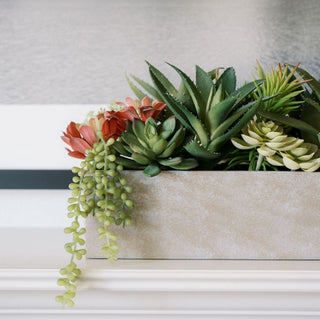
The rule is straightforward: choose pieces that never explicitly reference the holiday. Greenery that functions as structure. Florals in soft tones that expand the palette without disrupting it. Textiles in natural fibers that lighten the weight of the table. Vessels in sculptural forms that anchor arrangements. These elements work for Easter because they work for spring.
Avoid novelty. Themed decorations feel temporary because they are. They're designed to be displayed briefly and then stored. This creates a cycle where homes never settle. The foundation doesn't get established because the focus is always on the next holiday moment.
The pieces that endure are the ones built on material quality and architectural presence. This approach is reflected in the Hunter Collection, where familiar forms and deeper textures support rooms across seasons rather than rotate with them. A boxwood wreath anchors an entry in April and September. Linen napkins support Easter brunch and summer dinners. Faux peony stems provide soft color in spring and remain elegant through early summer. The investment isn't seasonal. It's structural.
Easter Decor Outdoor: Entry and Porch as Spring Welcome

The entry sets the tone for the gathering. This is why Easter decor outdoor matters, but restraint is critical. Wreath overload is common with multiple ribbons, artificial flowers in bright pastels, and layered decorations. The intent is welcoming, but the result often looks busy.
One strong green gesture works better. A 30-inch artificial boxwood wreath provides green without announcement. The form is classic and the texture is organic. It references spring without explanation and anchors the entry year-round. The wreath doesn't require seasonal storage because it was never explicitly Easter to begin with.
For porches, a 36-inch double boxwood topiary in a pot establishes vertical line and provides sculptural presence. Position it near the door or flanking the entry. The topiary doesn't need additional decoration. Its form and scale are the gesture. Pair it with a natural fiber mat and minimal surrounding elements. The composition should feel cohesive and calm.
The outdoor styling should signal spring, not Easter specifically. This allows the entry to remain welcoming through the entire season without requiring adjustment after the holiday passes.
Easter Decor Table: Intention, Not Clutter
The table is where Easter gatherings center. Easter tablescaping traditionally emphasizes florals, layered linens, and pastel accents, but the most successful tables are the ones that treat these elements architecturally rather than decoratively.
Start with the tablecloth as foundation. A blush lilies tablecloth provides botanical pattern and soft color without reading as explicitly Easter. The design remains appropriate through spring and supports both holiday meals and everyday dining. This is the kind of foundation that allows seasonal styling to feel intentional rather than temporary.
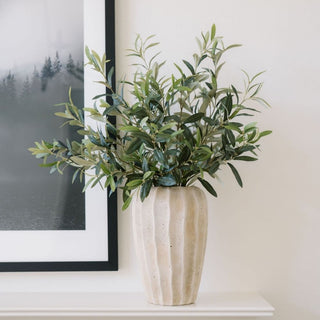
The centerpiece establishes mass and sightlines, not height and clutter. Use a 15.5-inch Isabella decorative vase with artificial light pink peony stems or 35-inch light green artificial hydrangea stems. The vase has sculptural weight. The stems introduce soft color and organic form. Together they create a focal point that supports the table without overwhelming it.
For a longer table or console, the 9-foot artificial olive leaf garland can be draped naturally down the center as an alternative to a tall centerpiece. The garland introduces texture and creates horizontal movement without obstructing sightlines. It works particularly well for buffet tables or side consoles where traditional centerpieces might feel too formal.
The centerpiece should be substantial enough to register as intentional but low enough to allow conversation. Height matters less than mass and form. If guests need to move the arrangement to see each other, it's too large or poorly positioned.
Layer the table with blush lilies napkins that complement the tablecloth without matching it exactly. The tonal relationship creates cohesion. The slight variation creates depth. Use simple vessels for individual place settings if needed, but avoid overcrowding. The table needs room for serving dishes, elbows, and natural movement during the meal.
Keep the palette seasonless with whites, creams, soft greens, and blush tones. These colors work for Easter and transition naturally into late spring without requiring storage or replacement.
Easter Decor: Eggs and Bunnies Without Novelty

Easter decor eggs work when they're styled as form and material rather than childish craft. Avoid plastic eggs in bright pastels. Choose naturally dyed eggs in tonal variations of cream, soft pink, pale green, and muted blue. Display them in a single substantial bowl rather than scattering them across surfaces. The repetition of form creates rhythm. The tonal palette creates cohesion.
Position the bowl on a console, side table, or kitchen counter where it functions as a sculptural accent. The eggs don't need to be perfectly arranged. Slight variation in how they sit creates the sense that they're real rather than staged. This is Easter decor that references the holiday through form without relying on novelty.
For Easter decor bunnies and Easter decor rabbits, the bunny napkin fold using quality linens provides the gestural acknowledgment many hosts want without adding clutter or novelty items that get stored after the holiday.
This approach solves the intent for bunny decor without requiring purchases that only work for one holiday. The napkins transition into spring table settings, picnics, and everyday use.
Easter Decor Tree: Spring Sculpture and Hanging Form
An Easter decor tree isn't a novelty item. It's a spring sculpture that uses vertical form and suspended elements to create presence. There are several refined approaches depending on the space and aesthetic.
A minimal twig tree on a console uses branches positioned in a tall vase to create height and organic silhouette. Choose branches with early buds or interesting form. The structure itself is the gesture. If you have decorative egg ornaments, they can be hung from the branches using neutral ribbon ties, but the tree doesn't require ornaments to function. The vertical line and sculptural form are enough.
A branch canopy in a tall vase creates the same effect with more density. Use multiple branches to establish mass and fill, creating a more substantial tree moment without requiring live branches or constant maintenance.
For outdoor spaces, a tree moment can be created by hanging elements from existing branches. Suspended form creates vertical rhythm and acknowledges the season through structure rather than decoration.
The key is understanding that an Easter tree works through structure and silhouette, not through ornaments. If you choose to hang items, use restraint. A few well-placed elements work better than dense coverage. The tree should feel like a spring gesture, not a craft project.
Where to Buy Easter Decor Online (Including Amazon)

When you’re deciding where to buy Easter decor or browsing Easter decorations online, look for pieces that rely on material and scale, not themed cues. Prioritize quality construction, realistic finishes, and silhouettes that still feel right once the holiday passes. Let greenery act as the grounding element, let florals create a single clean focal moment, and choose natural-fiber textiles that soften with use rather than date themselves.
If you are looking for Easter decor on Amazon, select CG Hunter pieces are available through our Amazon storefront. The focus is on items designed for longevity rather than seasonal rotation, including greenery, florals, textiles, and vessels that support spring entertaining without requiring storage after Easter.
The best approach is building a foundation of seasonless pieces that work year-round, then adjusting small details as holidays arrive. This eliminates the cycle of constant replacement and creates homes that feel grounded rather than constantly in transition.
Designer Answers: Easter Decor and Spring Styling
What are Easter decor ideas that feel elevated, not cluttered? Focus on greenery as structure, florals in soft tones positioned architecturally, layered linens in natural fibers, and vessels with sculptural presence. Use one substantial centerpiece instead of multiple small arrangements. Choose pieces that never explicitly reference Easter but work for the broader spring season. Avoid novelty items, themed decorations, and pastel overload. The goal is creating spaces that feel seasonally appropriate without requiring dismantling after the holiday.
How do you decorate an Easter table for spring? Start with a botanical tablecloth in soft tones as foundation. Use a substantial centerpiece with mass and clear sightlines, positioned low enough for conversation. Layer with quality napkins in complementary tones. Leave room for serving dishes and natural movement. Keep the palette seasonless with whites, creams, soft greens, and blush. The table should support gathering without obstruction and remain appropriate through late spring without adjustment.
What is the best Easter decor outdoor for an entry or porch? One strong green gesture works better than layered decorations. A substantial boxwood wreath anchors the door year-round. A double boxwood topiary provides vertical line and sculptural presence near the entry. Pair with a natural fiber mat and minimal surrounding elements. The outdoor styling should signal spring rather than Easter specifically, allowing it to remain welcoming through the entire season without requiring storage after the holiday.
How do you decorate with Easter eggs without it looking childish? Style eggs as form and material rather than craft. Use naturally dyed eggs in tonal variations of cream, soft pink, pale green, and muted blue. Display in a single substantial bowl rather than scattering across surfaces. Position the bowl on a console or side table where it functions as sculptural accent. The repetition of form creates rhythm while the tonal palette creates cohesion. Avoid plastic eggs and bright pastels.
How do you use bunnies in Easter decor without buying bunny decorations? Create a bunny napkin fold using quality linen or cotton napkins. Fold the napkin into a triangle, roll loosely from the long edge, then tie once in the center with neutral ribbon to create ear shapes. Position on the plate with a name card or single stem. The fold is recognizable without being literal, and the napkin remains functional after the meal and transitions into spring table settings.
What is an Easter decor tree and how do you style it? An Easter tree is a spring sculpture using vertical form and suspended elements. Use branches in a tall vase to create height and organic silhouette. The structure itself is the gesture. If hanging ornaments, use neutral ribbon ties and restraint. A few well-placed elements work better than dense coverage. The tree can also be created outdoors by hanging items from existing branches. It works through structure and silhouette, not through ornaments.
Where can I buy Easter decorations online that feel elevated? Look for pieces built on quality construction, realistic finishes, and forms that transition beyond a single holiday when searching for Easter decorations online. Prioritize greenery that functions as structure, florals positioned architecturally, and textiles in natural fibers. Choose items designed for longevity rather than seasonal rotation. Build a foundation of seasonless pieces that work year-round, then adjust small details as holidays arrive.
Is there Easter decor on Amazon that still looks refined? Yes, select CG Hunter pieces focus on items designed for longevity including greenery, florals, textiles, and vessels that support spring entertaining without requiring storage after Easter. Look for realistic construction, natural materials, and architectural forms rather than themed novelty items. The pieces should feel appropriate for Easter and transition naturally into late spring.
Spring Entertaining Through Easter

Easter decor ideas that transition into spring are built on principles that endure beyond a single holiday. Greenery provides structure. Florals anchor arrangements architecturally. Textiles layer without clutter. Vessels create focal points through form and mass. These elements support Easter gatherings and remain relevant through May and beyond because they were never exclusively Easter to begin with.
The homes that feel most grounded during Easter are the ones that resist novelty in favor of intention. They choose fewer, better pieces. They edit surfaces to allow breathing room. They trust that restraint creates more impact than abundance. The result is spaces that feel seasonally appropriate without requiring constant adjustment or storage cycles. Easter becomes one expression of a broader spring foundation rather than a separate decorating project.
Explore architectural greenery, refined vessels, and seasonless styling throughout the CG Hunter collection, including the Hunter Collection, designed to support spring entertaining and gatherings with structure and intention. Follow CG Hunter on Instagram, Pinterest, TikTok, and Substack for perspectives on designing tables and entries that welcome without clutter and transition seamlessly across the season. Select pieces are available through our Amazon storefront. For wholesale inquiries, visit us on Faire.